Diabetic-Friendly Pantry Staples: Lower-Sugar, Higher-Fiber Foods to Support Blood Sugar Balance
January 6, 2026
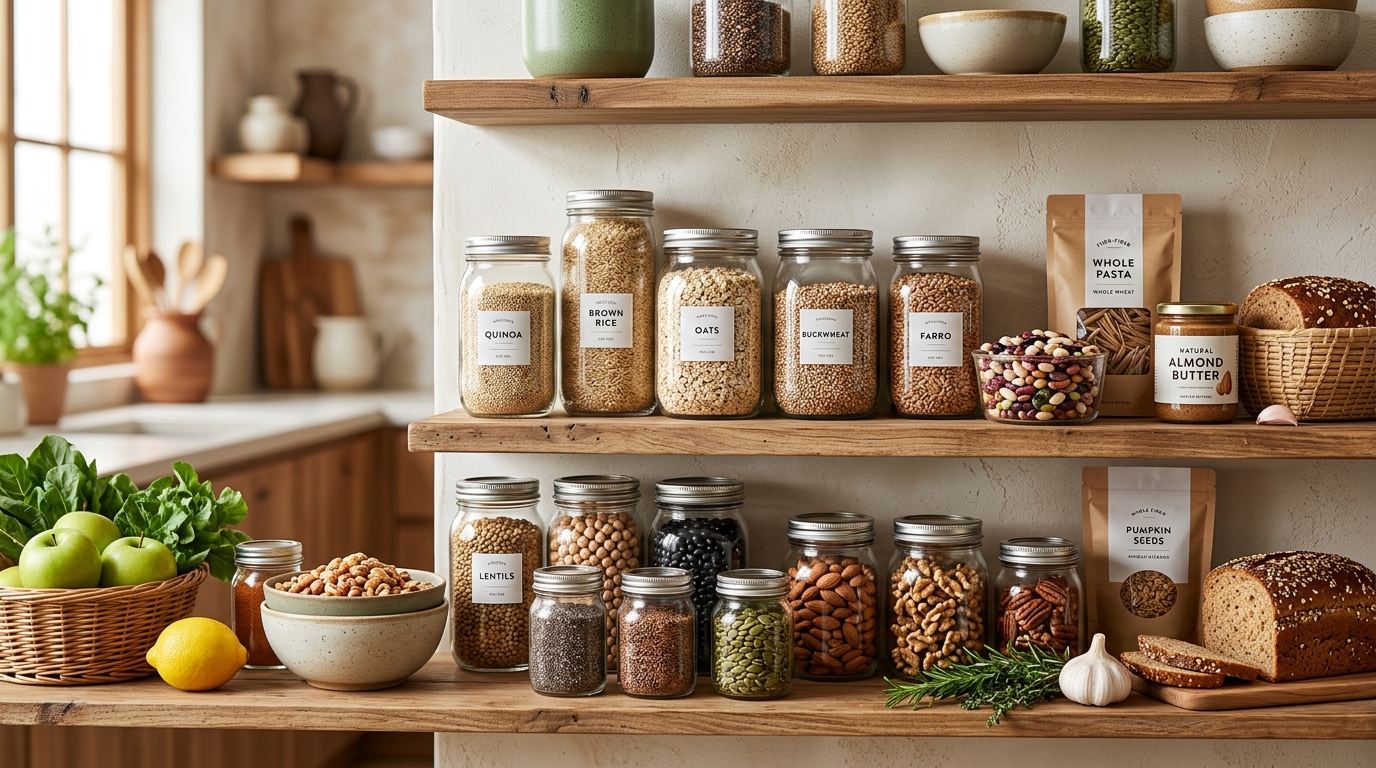
Building a diabetic-friendly kitchen starts with what you stock on your shelves. Learn which lower-sugar, higher-fiber staples best support blood-sugar management, why they work from a scientific perspective, and how to use them in everyday meals without feeling deprived.
## Why Pantry Staples Matter for Blood Sugar Management
For anyone managing diabetes or prediabetes, what you keep in your pantry and fridge quietly shapes your blood sugar every single day. Stable blood glucose is influenced not just by medications and exercise, but by the *default* foods you reach for when you are hungry, busy, or stressed.
Focusing on lower-sugar, higher-fiber staples helps:
- **Slow glucose absorption** so blood sugar rises more gradually
- **Improve satiety** so you feel full longer and are less likely to overeat
- **Support insulin sensitivity** through better overall dietary quality
- **Reduce glycemic variability** (large swings up and down), which is linked to complications
The goal is not perfection, but building an environment where the *easier* choice is also the *blood-sugar-friendly* choice.
---
## Key Principles of Diabetic-Friendly Staples
Before diving into specific foods, it helps to understand what makes a staple more supportive of blood sugar control.
### 1. Low Glycemic Impact, Not Just "Sugar-Free"
A food can be technically sugar-free and still spike blood sugar if it is rapidly digested starch (for example, some refined crackers). Better markers include:
- **Glycemic index (GI):** How quickly a food raises blood sugar
- **Glycemic load (GL):** GI plus the amount of carbohydrate in a typical serving
Choosing foods with **lower GI and moderate GL** can help keep post-meal glucose more stable.
### 2. High in Fiber, Especially Soluble and Viscous Fiber
Fiber is one of the most powerful tools for blood sugar management:
- **Soluble/viscous fiber** (found in oats, barley, beans, some fruits and seeds) forms a gel-like substance that slows gastric emptying and glucose absorption.
- **Insoluble fiber** (found in whole grains, bran, many vegetables) helps with digestive health and can indirectly support weight management.
Aim for **25–38 grams of fiber per day**, depending on energy needs and medical advice. Most adults fall far short of this, so fiber-rich staples are key.
### 3. Higher Protein and Healthy Fats
Protein and fat do not raise blood sugar the way carbohydrates do. Including them with carbohydrate-containing foods can:
- Blunt the blood sugar spike after a meal
- Enhance satiety and reduce cravings
- Help preserve lean muscle mass, which supports glucose metabolism
Choose **lean proteins** and **unsaturated fats** (from plants and fish) more often than saturated fats.
### 4. Minimally Processed Over Ultra-Processed
Ultra-processed foods are often:
- Low in fiber
- High in refined starches and added sugars
- Easy to overeat
Staples that are **closer to their whole-food form** typically have a gentler effect on blood sugar and provide more vitamins, minerals, and phytonutrients.
---
## Grain and Starch Staples: Smarter Carbohydrate Choices
Carbohydrates are not the enemy, but *type* and *portion* matter. These grain and starch staples tend to be more blood-sugar-friendly when portioned appropriately.
### Better Grain Options
- **Intact whole grains** such as steel-cut oats, barley, quinoa, and farro have more fiber and a lower glycemic impact than refined grains.
- **Whole-grain breads and wraps** with a short ingredient list and at least 3–4 grams of fiber per serving are generally better choices than white bread.
- **Brown, red, or black rice** usually have more fiber and nutrients than white rice, though portions still matter.
**Why they help:** Intact or minimally processed grains take longer to digest. Their fiber slows the release of glucose into the bloodstream, leading to a more gradual rise in blood sugar.
**Practical tips:**
- Check labels and choose products where **whole grain** is listed as the first ingredient.
- Compare fiber: aim for **more fiber and fewer total carbohydrates** per serving.
- Pair grains with protein (such as beans, tofu, eggs, fish, or poultry) and non-starchy vegetables to further moderate blood sugar.
### Lower-Glycemic Starch Alternatives
- **Legumes** (beans, lentils, chickpeas) can replace some or all of the grain in meals.
- **Root vegetables** like carrots and turnips are generally lower in starch than potatoes.
- **Winter squash** (such as butternut or acorn) offers more fiber and nutrients than many refined starches.
**Why they help:** Legumes in particular have a low glycemic index and are rich in both fiber and protein, making them powerful blood-sugar stabilizers.
---
## Fiber-Rich Fruits and Vegetables: Using Natural Carbs Wisely
Fruits and vegetables are important for vitamins, minerals, and antioxidants, but their effect on blood sugar varies.
### Non-Starchy Vegetables: The Foundation
Non-starchy vegetables include leafy greens, broccoli, cauliflower, peppers, cucumbers, tomatoes, zucchini, mushrooms, and many others.
**Benefits for blood sugar:**
- Very low in carbohydrates and calories
- High in fiber and water content, promoting fullness
- Provide polyphenols and other compounds that may support insulin sensitivity
**Practical tips:**
- Aim for **half your plate** to be non-starchy vegetables at most meals.
- Keep a variety of frozen and fresh options on hand for quick additions to meals.
### Fruit: Focus on Whole, High-Fiber Choices
Whole fruits are often preferable to fruit juices or sweetened dried fruits.
**More blood-sugar-friendly options tend to include:**
- Berries (strawberries, blueberries, raspberries, blackberries)
- Apples and pears (especially with the skin)
- Citrus fruits (oranges, grapefruit, mandarins)
**Why they help:** These fruits typically have more fiber and water relative to their natural sugar content, which slows glucose absorption compared with juice or refined sweets.
**Practical tips:**
- Pair fruit with **protein or healthy fat** (such as nuts, seeds, or yogurt) to blunt blood sugar spikes.
- Be mindful of portion sizes; even natural sugars add up.
---
## Protein Staples: Building a Blood-Sugar-Friendly Base
Protein is crucial for satiety, muscle maintenance, and overall metabolic health.
### Animal-Based Protein Staples
- **Fish and seafood** provide lean protein and, in some cases, omega-3 fats, which may support heart health—a key concern in diabetes.
- **Skinless poultry** is typically lower in saturated fat than some red meats.
- **Eggs** can be a convenient, nutrient-dense option for many people.
### Plant-Based Protein Staples
- **Beans, lentils, and chickpeas** offer a combination of protein, fiber, and slow-digesting carbohydrates.
- **Tofu and tempeh** are versatile soy-based proteins that can be used in many dishes.
- **Edamame** (young soybeans) provide both protein and fiber.
**Why they help:** Protein slows gastric emptying and helps prevent rapid spikes in blood sugar when eaten with carbohydrate-containing foods. Plant-based proteins often come packaged with fiber, offering a double benefit.
**Practical tips:**
- Include a **source of protein at every meal and snack**.
- Rotate between animal and plant sources to diversify nutrients and support heart health.
---
## Healthy Fat Staples: Supporting Satiety and Heart Health
Healthy fats do not raise blood sugar directly, but they influence overall metabolic health and fullness.
### Beneficial Fat Sources
- **Nuts and seeds** (such as almonds, walnuts, chia, flax, pumpkin seeds) provide healthy fats, fiber, and some protein.
- **Nut and seed butters** (without added sugar) can be satisfying and convenient.
- **Olive oil and avocado oil** are rich in monounsaturated fats, associated with heart and metabolic health.
- **Avocados** offer fiber and heart-healthy fats.
**Why they help:** Including moderate amounts of healthy fat in meals can:
- Increase satiety and reduce the urge to snack on high-sugar foods
- Help absorb fat-soluble vitamins (A, D, E, K)
- Support cardiovascular health, which is especially important for those with diabetes
**Practical tips:**
- Use nuts and seeds as **toppings or additions** to meals rather than as mindless snacks, since they are calorie-dense.
- Choose oils that are **liquid at room temperature** more often than solid fats.
---
## Smarter Sweetness: Lower-Sugar and Sugar-Alternative Staples
Managing diabetes does not necessarily mean eliminating all sweetness, but it does require more intentional choices.
### Reducing Added Sugars
Common high-sugar staples include sweetened cereals, flavored yogurts, sugary drinks, and many condiments.
**Strategies to lower sugar intake:**
- Choose **plain** versions of foods (like yogurt or oatmeal) and add flavor with fruit, spices, or a small amount of a sugar alternative.
- Read labels and compare products, selecting those with **less added sugar per serving**.
### Non-Nutritive and Low-Calorie Sweeteners
Options may include stevia, monk fruit extract, and certain sugar alcohols like erythritol. These provide sweetness with little or no impact on blood sugar.
**Considerations:**
- They can be useful tools to **transition away from high-sugar foods**.
- Some people experience digestive discomfort with certain sugar alcohols.
- They should complement, not replace, an overall pattern of whole, nutrient-dense foods.
**Practical tips:**
- Use sweeteners **sparingly** to gradually adjust your palate to less intense sweetness.
- Discuss with a healthcare provider if you have concerns about specific sweeteners and your health conditions.
---
## High-Fiber Enhancers: Simple Add-Ins That Make a Big Difference
Certain shelf-stable foods can be added to meals to boost fiber and improve blood sugar response.
### Useful Fiber-Boosting Staples
- **Chia seeds** and **ground flaxseeds** provide fiber and omega-3 fats.
- **Psyllium husk** is a concentrated source of soluble fiber.
- **Wheat bran or oat bran** can increase total fiber intake.
**Why they help:** These concentrated sources of fiber can significantly slow carbohydrate absorption and improve feelings of fullness when used appropriately.
**Practical tips:**
- Increase fiber **gradually** and drink adequate water to reduce digestive discomfort.
- Check with your healthcare provider if you are on certain medications, as high-fiber supplements can affect absorption.
---
## Beverage Staples: Rethinking What You Drink
Liquid calories and sugars can have a powerful and often underestimated impact on blood sugar.
### Better Beverage Choices
- **Water** (still or sparkling) should be the primary beverage.
- **Unsweetened tea** (herbal, green, or black) can add variety without sugar.
- **Unsweetened coffee** can fit into many diabetes meal plans when consumed in moderation and without high-sugar additions.
**Why they help:** Replacing sugar-sweetened beverages with low- or no-calorie options can significantly reduce daily glucose spikes and overall calorie intake.
**Practical tips:**
- Flavor water with slices of citrus, cucumber, or herbs if plain water feels boring.
- Be cautious with "diet" or "light" drinks; while they may not raise blood sugar directly, they can maintain a strong preference for sweetness.
---
## Label-Reading Skills: Choosing Better Staples at the Store
Being able to quickly evaluate a product label is one of the most practical skills for building a diabetic-friendly pantry.
### What to Look For
- **Serving size:** Check how many servings you actually consume.
- **Total carbohydrates and fiber:** A higher fiber-to-carb ratio is generally more favorable.
- **Added sugars:** Aim for products with **little or no added sugar**.
- **Ingredients list:** Shorter lists with recognizable foods usually indicate less processing.
### Helpful Rules of Thumb
- For grain products, aim for at least **3 grams of fiber per serving**.
- Be cautious with products marketed as "diabetic" or "sugar-free"; they may still be high in refined starches or unhealthy fats.
---
## Putting It All Together: Building a Blood-Sugar-Friendly Food Environment
Diabetic-friendly staples are less about restriction and more about **strategic substitution and preparation**. A few guiding ideas:
- **Crowd out** refined, high-sugar foods by stocking your kitchen with satisfying, higher-fiber options.
- **Balance every meal** with a combination of non-starchy vegetables, lean or plant-based protein, healthy fats, and smart carbohydrates.
- **Plan ahead** so that when you are tired or busy, you have quick, blood-sugar-friendly options available.
- **Personalize** your choices based on blood glucose monitoring, preferences, cultural foods, and guidance from your healthcare team.
Over time, these staples can help stabilize blood sugar, support weight management, and reduce the risk of diabetes-related complications—while still allowing you to enjoy flavorful, satisfying meals.
#diabetes#blood sugar#high fiber#healthy pantry#nutrition education