What Is the 80/20 Rule for Meals? A Realistic Guide to Balanced Eating
January 11, 2026
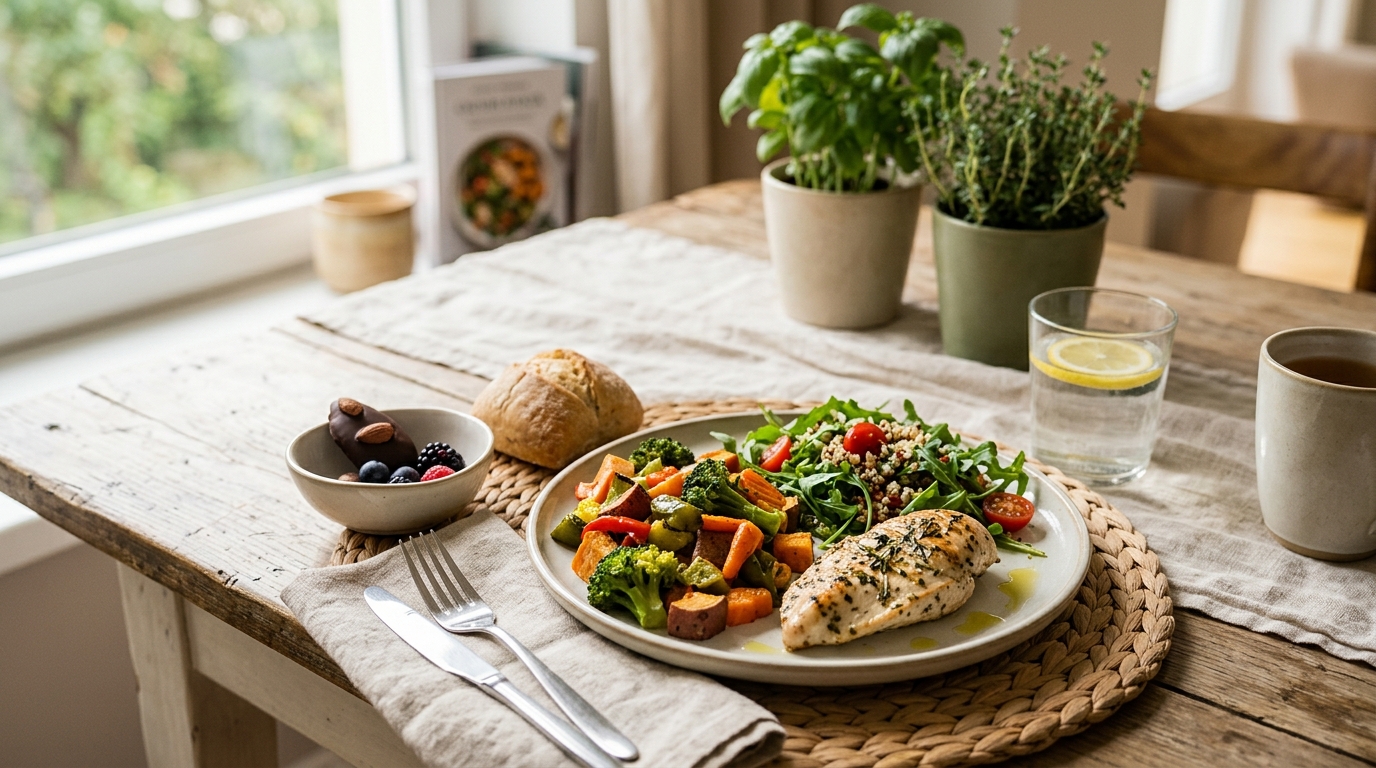
The 80/20 rule for meals is a flexible approach to healthy eating that prioritizes nutrient-dense foods most of the time while allowing room for enjoyment and social eating. Learn how it works, the science behind it, and how to apply it without counting every bite.
## What Is the 80/20 Rule for Meals?
The 80/20 rule for meals is a flexible eating pattern where you aim to make about **80% of your food choices nutrient-dense and health-promoting**, and allow up to **20% for more indulgent or less nutritious options**.
It’s not a strict diet, and it doesn’t require perfection. Instead, it’s a **framework for balance** that can help you support your health without feeling deprived or obsessed with food rules.
---
## The Core Idea: Progress, Not Perfection
The 80/20 rule recognizes that:
- You don’t need to eat perfectly to be healthy.
- Occasional treats are compatible with long-term wellness.
- Consistency over time matters more than individual meals.
In practice, this might look like:
- Most meals built around vegetables, fruits, whole grains, lean proteins, and healthy fats.
- Some meals or snacks including foods chosen primarily for pleasure—such as desserts, fried foods, or highly processed snacks—without guilt.
The exact numbers (80 and 20) are **guidelines**, not rigid targets. The main goal is to **anchor your diet in nutritious foods** while **leaving room for enjoyment and flexibility**.
---
## The Nutrition Science Behind the 80/20 Approach
### 1. Overall Dietary Pattern Matters Most
Research in nutrition consistently shows that **overall dietary patterns** are more important than individual foods or single meals. Diets rich in:
- Vegetables and fruits
- Whole grains
- Legumes, nuts, and seeds
- Lean proteins (such as fish, poultry, tofu, beans)
- Unsaturated fats (like olive oil, avocado, nuts)
are associated with lower risks of heart disease, type 2 diabetes, and some cancers.
The 80/20 rule supports this by encouraging you to make these foods the **foundation** of your eating pattern, while recognizing that less nutritious foods eaten occasionally have relatively **minor impact** when the overall pattern is strong.
### 2. Psychological Flexibility and Sustainability
Overly restrictive eating can backfire. Studies show that:
- **Rigid dietary restraint** is linked to higher risk of binge eating and feelings of loss of control around food.
- **Flexible restraint**—setting general health goals but allowing some flexibility—is associated with better long-term weight management and psychological well-being.
The 80/20 rule is a form of **flexible restraint**. It allows treats and social foods without labeling them as “failures,” which can reduce guilt and all-or-nothing thinking.
### 3. Blood Sugar, Energy, and Satiety
When about 80% of your intake comes from minimally processed, nutrient-rich foods, you are more likely to:
- Maintain **stable blood sugar**, especially when meals include fiber, protein, and healthy fats.
- Experience better **satiety** (feeling full and satisfied), which can reduce overeating.
- Support **steady energy levels** and mood throughout the day.
The 20% flexibility allows you to include foods that may not offer much nutritionally but can contribute to **enjoyment, cultural traditions, and social connection**, which are also important for overall well-being.
---
## What Does 80/20 Look Like in Real Life?
The 80/20 rule can be applied in several ways. You do **not** have to count every calorie or gram of food. Instead, think in terms of **patterns and proportions**.
### Option 1: 80% of Meals, 20% of Meals
You might aim for:
- Most meals (for example, 17–19 out of 21 meals per week) to be primarily nutrient-dense.
- A few meals each week where you are more relaxed with your choices—such as a weekend brunch, takeout night, or a celebration meal.
### Option 2: 80% of Each Day, 20% of Each Day
In this approach, each day includes:
- Mostly whole, minimally processed foods.
- A small portion of less nutritious foods—like a dessert, snack, or sweetened drink—fitting into that 20% range.
### Option 3: Visual Plate Balance
Instead of tracking meals or days, you can:
- Aim for the majority of your plate to be filled with vegetables, whole grains, and lean proteins.
- Use a smaller portion of the plate for richer, more indulgent items.
This visual method is especially helpful if you prefer not to think in numbers at all.
---
## What Counts as the 80%?
The **80%** focuses on foods that are:
- **Nutrient-dense**: Provide a lot of vitamins, minerals, and beneficial compounds relative to their calorie content.
- **Supportive of long-term health**: Linked with reduced risk of chronic disease.
Examples of categories that typically fall into the 80% zone:
- Vegetables and fruits (fresh, frozen, or minimally processed)
- Whole grains (such as oats, brown rice, quinoa, whole grain breads/pastas)
- Legumes (beans, lentils, peas)
- Lean proteins (fish, poultry, eggs, tofu, tempeh, low-fat dairy, etc.)
- Nuts, seeds, and healthy fats (olive oil, avocado, nut butters, etc.)
Within this 80%, you can still enjoy variety and flavor—spices, herbs, sauces, and diverse cuisines all fit here as long as the **overall nutritional profile** is strong.
---
## What Counts as the 20%?
The **20%** includes foods that are often:
- Higher in added sugars, saturated fats, or refined starches
- Lower in fiber and beneficial nutrients
- Consumed mainly for taste, convenience, or social reasons
Examples of categories that typically fall into the 20% zone:
- Desserts and sweets
- Sugar-sweetened beverages
- Fried foods
- Highly processed snack foods
- Rich restaurant or fast-food meals
The key is not to demonize these foods. Instead, see them as **occasional, intentional choices** that fit into a balanced pattern.
---
## Health Benefits of Using the 80/20 Rule
### 1. Supports Long-Term Weight Management
By focusing mostly on nutrient-dense, higher-fiber, and higher-protein foods, you naturally tend to:
- Feel fuller on fewer calories
- Reduce mindless snacking on ultra-processed foods
- Maintain more stable eating patterns
The 20% flexibility can reduce the feeling of restriction, which often leads to **better adherence** over time.
### 2. Reduces Risk of Chronic Disease
When 80% of your intake emphasizes whole foods, you are more likely to:
- Consume adequate fiber, which supports heart and gut health
- Get a broad range of vitamins, minerals, and antioxidants
- Limit excessive intake of added sugars and unhealthy fats
These factors are linked with a lower risk of conditions like **heart disease, type 2 diabetes, and certain cancers**.
### 3. Improves Relationship With Food
The 80/20 rule encourages:
- **Less guilt** around enjoying treats
- **More mindfulness** about everyday food choices
- A shift away from labeling foods as strictly “good” or “bad”
This can help cultivate a more **balanced, sustainable mindset** toward eating.
---
## Practical Tips for Applying the 80/20 Rule
### 1. Start With Awareness, Not Perfection
Instead of trying to instantly calculate exact percentages:
- Notice what your current pattern looks like.
- Identify where most of your **highly processed or indulgent foods** show up.
- Choose one or two areas to gently shift toward more nutrient-dense options.
### 2. Plan the 80% to Make the 20% Easier
When your environment supports healthy choices, sticking to the 80/20 rule feels more natural. You can:
- Keep fruits, cut vegetables, nuts, or yogurt easily accessible.
- Stock whole grains, legumes, and lean proteins for quick meals.
- Limit how many ultra-processed snacks you keep at home so the 20% is more intentional.
### 3. Use the Week, Not Just the Day, as Your Frame
Some days may look more like 70/30 or 90/10, and that’s normal. Consider balance over the **entire week**:
- If you have a celebration meal one day, you don’t need to compensate or restrict heavily the next.
- Simply return to your usual nutrient-dense pattern for most other meals.
### 4. Prioritize Enjoyment in Both the 80% and the 20%
Healthy eating is easier to maintain when it’s enjoyable:
- Explore different cuisines that feature vegetables, legumes, and whole grains.
- Use herbs, spices, and flavorings to make nutrient-dense meals satisfying.
- When you choose treats, pick ones you **truly enjoy** and savor them mindfully.
### 5. Watch Out for Portion Creep in the 20%
It’s possible for the 20% to slowly expand:
- Pay attention to portions of sweets, fried foods, and sugary drinks.
- Consider frequency: are indulgent choices becoming daily habits or multiple times per day?
- Without strict rules, use gentle self-checks: *Is this still feeling like an intentional 20%, or is it starting to crowd out my 80%?*
### 6. Adapt the Ratio to Your Needs
The 80/20 rule is a **guideline**, not a medical prescription. Some people may benefit from a different balance, such as 90/10 or 70/30, depending on:
- Health conditions (e.g., diabetes, heart disease, high cholesterol)
- Athletic performance goals
- Personal preferences and cultural practices
If you have specific medical conditions, it’s wise to discuss your approach with a **registered dietitian or healthcare provider**.
---
## Common Misconceptions About the 80/20 Rule
### Misconception 1: 20% Means “Anything Goes”
The 20% is not a license to overeat or ignore how foods make you feel. It’s meant to:
- Allow flexibility without guilt
- Encourage **mindful enjoyment**, not automatic or emotional eating
### Misconception 2: You Must Track Everything Precisely
The 80/20 rule is not about:
- Weighing foods
- Counting every calorie
- Logging every meal
Instead, it’s about **general patterns** and **reasonable judgment**. Over-tracking can increase stress and reduce the sense of freedom this framework is meant to provide.
### Misconception 3: Healthy Foods Can’t Be Part of the 20%
Sometimes a food is nutritionally neutral but emotionally meaningful such as a traditional holiday dish. It might be made with rich ingredients, but it carries **cultural or family significance**. These can fit beautifully into your 20% without needing to be “healthified.”
---
## Is the 80/20 Rule Right for You?
The 80/20 rule can be particularly helpful if you:
- Feel stuck in an all-or-nothing cycle with diets
- Want structure without rigid rules
- Value both health and enjoyment in your eating pattern
It may be less appropriate if you:
- Have a history of disordered eating and find any form of restraint triggering
- Require more specific nutrition guidance for a medical condition
In those cases, individualized support from a qualified professional is especially important.
---
## Key Takeaways
- The 80/20 rule for meals is a **flexible, realistic approach** where about 80% of your food choices are nutrient-dense and health-promoting, and up to 20% allow for more indulgent or less nutritious foods.
- It emphasizes **overall patterns** rather than perfection at every meal.
- Benefits include better long-term sustainability, potential support for weight management, reduced disease risk, and a healthier relationship with food.
- You can apply it by thinking in terms of weekly patterns, daily balance, or visual plate proportions—no strict counting required.
- Adapt the ratio to your needs, and use it as a **guiding principle**, not a rigid rule.
Ultimately, the 80/20 rule is about making **mostly nourishing choices most of the time**, while still leaving space for joy, culture, and connection through food.
#80 20 rule#balanced eating#nutrition basics#healthy habits#sustainable diet