What’s the Best Meal Planner? How to Choose a System That Actually Supports Your Health
January 11, 2026
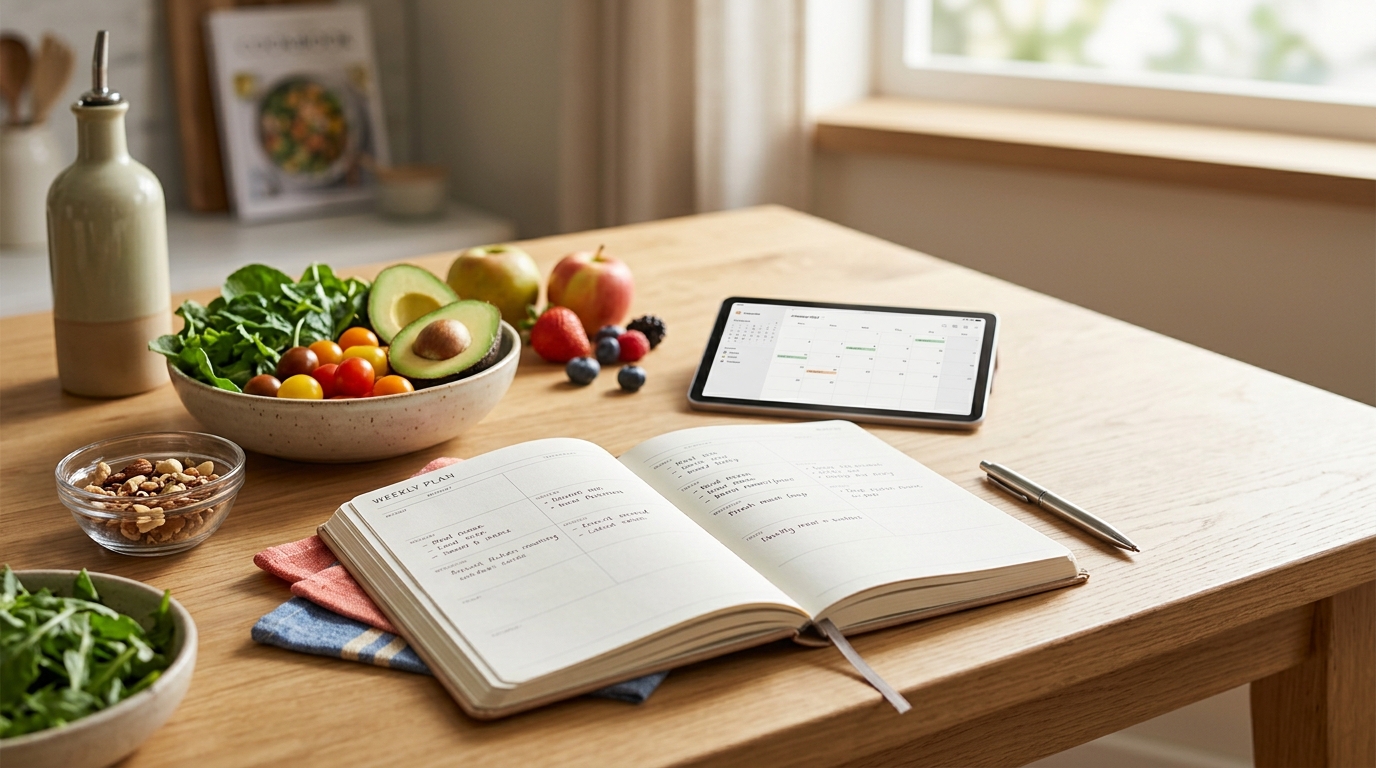
The “best” meal planner isn’t a specific app or template, it’s the system that fits your goals, lifestyle, and nutrition needs. Learn how to evaluate meal planners, what features truly matter for your health, and how to build a sustainable planning routine you’ll actually stick with.
## Why “What’s the Best Meal Planner?” Is the Wrong Question
When people ask, *“What’s the best meal planner?”* they often expect the name of a specific app, website, or notebook. In reality, the most effective meal planner is the one that:
- You can use consistently with minimal friction
- Supports your health goals (weight management, blood sugar balance, heart health, etc.)
- Fits your time, budget, and cooking skill level
- Reduces decision fatigue instead of adding more work
Rather than searching for a single “best” tool, it’s more useful to understand the **features and strategies** that make a meal planner truly health-supportive.
This guide will help you:
- Understand what a good meal planning system does for your body and brain
- Compare different types of meal planners (apps, paper, spreadsheets, hybrids)
- Identify which features matter most for your specific health goals
- Build a simple, sustainable planning routine
---
## What a Good Meal Planner Should Do for Your Health
A meal planner is more than a calendar of dinners. A well-designed system can directly support your **metabolism, energy levels, digestion, and mood**.
### 1. Support Balanced Nutrition
A strong meal planner helps you:
- **Distribute protein** across the day (not just at dinner), which supports muscle maintenance, satiety, and blood sugar control.
- **Include fiber-rich foods** regularly (vegetables, fruits, whole grains, legumes, nuts, seeds) to support digestion, gut health, and cholesterol management.
- **Balance carbohydrates and fats** so meals are satisfying and don’t cause extreme energy crashes.
- **Plan micronutrients** (like iron, calcium, magnesium, and omega-3s) by ensuring variety across the week.
**Actionable tip:** When evaluating any meal planner, ask: *Does this help me see the big picture of my week’s nutrition, not just individual meals?*
### 2. Stabilize Blood Sugar and Energy
Irregular eating and last-minute food decisions often lead to:
- Skipped meals
- Ultra-processed convenience foods
- Large, late-night meals
A good planner helps you:
- **Avoid long gaps without food**, which can lead to overeating later
- **Pair carbohydrates with protein and fat** to slow digestion and keep energy steady
- **Pre-plan snacks** so they’re intentional, not just impulse choices
This is particularly important for people with **insulin resistance, prediabetes, or diabetes**, but beneficial for everyone.
### 3. Reduce Stress and Decision Fatigue
Food decisions are cognitively demanding. A meal planner:
- Cuts down daily “What should I eat?” stress
- Prevents last-minute takeout by giving you clear options
- Helps you align meals with your schedule (e.g., quicker options on busy days)
Chronically high stress hormones (like cortisol) can interfere with sleep, appetite regulation, and blood sugar—so a planning tool that *reduces* stress indirectly supports your metabolic health.
---
## Types of Meal Planners: Pros, Cons, and Who They Suit
There’s no single best format. Each has strengths depending on your personality and lifestyle.
### 1. App-Based Meal Planners
These include meal planning apps, nutrition tracking apps with planning features, and calendar-based food planners.
**Pros:**
- Easy to duplicate weeks or rotate favorite meals
- Some integrate with grocery delivery or shopping lists
- Can track macros, calories, or specific nutrients if desired
- Helpful for data lovers and those who like automation
**Cons:**
- Can become obsessive if you’re prone to rigid tracking
- Screen fatigue or distraction from other apps
- Some lock helpful features behind subscriptions
**Best for:**
- People with specific goals (e.g., macros, sodium limits) who like numbers
- Tech-comfortable users who enjoy digital tools
**Health-focused features to look for:**
- Ability to tag meals as high-fiber, high-protein, or heart-healthy
- Customizable portion sizes and nutrition targets
- Clear weekly overview, not just daily logging
### 2. Paper Planners and Notebooks
This includes printed meal planning sheets, wall calendars, or a dedicated notebook.
**Pros:**
- No screens; can be calming and more mindful
- Easy to place in a visible spot (like the fridge)
- Flexible—can include notes about energy levels, digestion, cravings
**Cons:**
- No automatic nutrition analysis
- Harder to reuse or copy past weeks
- Can be misplaced or not consulted regularly
**Best for:**
- Visual thinkers and pen-and-paper lovers
- Families who want a shared, visible plan
**Health-focused ways to use them:**
- Add small icons or color codes for vegetables, protein, fiber
- Note how you feel after certain meals to identify patterns
### 3. Spreadsheet or Template-Based Planners
These can be simple tables you create yourself in a spreadsheet or document.
**Pros:**
- Highly customizable layout
- Can include columns for nutrition goals (e.g., veggie servings, protein source)
- Easy to copy weeks and build a rotation
**Cons:**
- Requires initial setup
- Less convenient on mobile unless synced to the cloud
**Best for:**
- People who like structure but don’t need a full app
- Those who want to align meals with budget, inventory, or batch-cooking plans
**Health-focused structure ideas:**
- Columns for: meal, main protein, vegetable/fruit, whole grain, healthy fat
- A weekly tally of fiber-rich meals or fish/legume servings
### 4. Hybrid Systems
Many people find success combining tools, such as:
- Planning the week on paper, tracking intake in an app
- Using an app to generate ideas, then writing the final plan on a fridge calendar
- Keeping a photo library of balanced meals on your phone as a quick-reference “idea bank”
This approach can offer flexibility while still keeping health goals in focus.
---
## Features That Actually Matter for Health (Not Just Convenience)
When evaluating any meal planner, these features are more important than fancy design.
### 1. Nutrition Visibility
You should be able to quickly see:
- **Where your protein is coming from** at each meal
- **How often vegetables and fruits appear** across the week
- **Frequency of ultra-processed foods** vs. whole or minimally processed choices
**Practical tip:** Create a simple checklist to use with any planner:
- Does each main meal include a source of protein?
- Is there at least one colorful plant food at each meal?
- Are there at least 2–3 high-fiber meals per day?
### 2. Flexibility and Real-Life Fit
Overly rigid planners often fail because life is unpredictable. Health-supportive planners:
- Allow for **backup options** (e.g., quick pantry meals)
- Include **buffer days** for leftovers or social events
- Can be adjusted without feeling like you “failed”
This flexibility protects you from the all-or-nothing mindset that can sabotage healthy habits.
### 3. Support for Specific Health Goals
Your best planner will differ depending on your needs:
- **Heart health:** Look for tools that help you track sodium, fiber, and sources of unsaturated fats.
- **Blood sugar balance:** Prioritize planners that help you space meals, include protein and fiber, and avoid long fasting periods.
- **Digestive health:** A system that highlights fiber variety (different plant foods) and notes symptoms can be valuable.
- **Weight management:** Tools that help with portion awareness and satiety (not just calories) are more sustainable.
---
## How to Build a Simple, Sustainable Meal Planning Routine
Instead of obsessing over the “perfect” planner, focus on a **repeatable routine**. Here’s a health-focused structure you can adapt to any tool.
### Step 1: Start with Your Schedule, Not Your Food
Look at your upcoming week:
- Which days are very busy? Plan **quicker, simpler meals** those days.
- Which days are more open? Choose meals that allow for **leftovers** or batch prep.
- Any evenings out, travel, or events? Mark them so you don’t over-plan.
This alignment prevents skipped meals and last-minute choices that often lead to less nutritious options.
### Step 2: Set 1–2 Nutrition Priorities for the Week
Examples:
- “Include vegetables at lunch every day.”
- “Have a protein-rich breakfast 5 days this week.”
- “Add two legume-based meals this week for fiber and plant protein.”
Then, use your planner to **intentionally build in** those priorities.
### Step 3: Plan Meals Around Key Nutrient Anchors
Instead of thinking in terms of specific dishes first, think:
- **Protein anchor:** What’s the main protein source? (e.g., fish, poultry, tofu, beans, eggs, yogurt)
- **Plant anchor:** Which vegetables or fruits will be included?
- **Fiber/starch anchor:** Whole grains, potatoes, or legumes?
- **Healthy fat anchor:** Nuts, seeds, avocado, olive oil, or fatty fish?
Once you choose these anchors, you can match them to familiar meals you already know and like.
### Step 4: Intentionally Plan Snacks (or Decide Not To)
Unplanned snacks are often where less nutritious choices creep in. Your planner should help you:
- Decide **if** you need snacks based on your schedule and hunger patterns
- Choose snacks that **support your goals** (e.g., protein + fiber for satiety)
Even a simple note like “afternoon protein + fruit snack” is enough to guide your choices.
### Step 5: Build in Backup Options
Life happens. A realistic planner includes:
- 1–2 **“emergency” meal ideas** using pantry or freezer items
- A flexible “leftover or simple meal” slot
This protects you from abandoning the plan when one day doesn’t go as expected.
---
## Signs Your Meal Planner Is Working for You
The best meal planner for you will show up in how you feel, not just how it looks. Positive signs include:
- More stable energy throughout the day
- Fewer intense cravings or late-night overeating
- Less stress around “What’s for dinner?”
- More consistent intake of vegetables, fruits, and protein
- Improved digestion and more regular bowel movements (thanks to better fiber intake)
If your system makes you feel anxious, overly restricted, or guilty when you deviate from it, it may need to be simplified or made more flexible.
---
## How to Choose *Your* Best Meal Planner
Use these questions to guide your choice:
1. **Do I prefer digital or paper?**
- If you already use your phone for everything, an app may integrate smoothly.
- If you like visual, tangible tools, try a paper planner or wall calendar.
2. **How much detail do I realistically want to track?**
- If you like data, choose something that can show macros or micronutrients.
- If that feels overwhelming, focus on a planner that supports patterns (e.g., “vegetable + protein at each meal”).
3. **What is my main health priority right now?**
- Look for or design a planner that highlights that priority (e.g., fiber, protein distribution, sodium, plant diversity).
4. **Can I see myself still using this in three months?**
- If it feels too complex, start simpler. You can always add layers later.
---
## Final Thoughts: The Best Meal Planner Is the One You’ll Use Consistently
There is no universally “best” meal planner—only the one that helps *you* eat more intentionally, nourish your body, and reduce stress.
When evaluating or setting up a system, prioritize:
- **Clarity:** You can see your week’s nutrition at a glance.
- **Simplicity:** It takes minutes, not hours, to maintain.
- **Flexibility:** It adapts when life changes.
- **Alignment:** It supports your specific health goals.
Start small: pick one tool, set one or two nutrition priorities for the week, and use your planner to support them. As you notice what works and what doesn’t, you can refine your system until it becomes a natural part of your healthy lifestyle.
#meal planning#nutrition#healthy eating#wellness#diet planning